Reimagining Data Review: Human-in-the-Loop AI Workflows for Clinical Data Management |
|
| Date: | May 21, 2026 |
| Type: | Hot Topic |
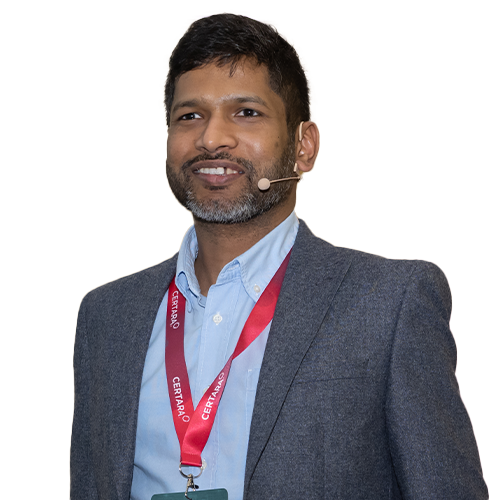
| Session Lead: | Sas Maheswaran (Market Owner, Clinical Data Strategy at CluePoints) |
| Location: | Online – 13:00 London BST/14:00 Paris CEST |
| Learning Objectives: |
|
| Who is this suitable for? | ACDM members and non-members who would like to join an open discussion concerning a Hot Topic in Data Management. |
| Outline content | The clinical data management (CDM) landscape is at a pivotal point where manual listing reviews can no longer keep pace with the complexity and volume of modern studies. Advances in artificial intelligence (AI), particularly large language models (LLMs) and explainable AI, present new opportunities to transform how data is reviewed, cleaned, and managed, while preserving human oversight and accountability. This session will explore how AI-driven insights, embedded into human-in-the-loop workflows, accelerate listing reviews and streamline query handling. We will demonstrate how AI surfaces anomalies and trends, how data managers validate and contextualize outputs, and how query response tracking is enhanced by this approach. Human involvement remains central, ensuring AI recommendations are trusted, transparent, and aligned with regulatory expectations. Beyond technology, the session will address the implications for people, processes, and governance. We will discuss workflow redesign and accountability, reskilling data managers to focus on higher-value tasks, retiring legacy solutions, and adopting new approaches to testing, validation, and inspection readiness. Attendees will leave with a vision for the next-generation CDM operating model, where AI augments human expertise, accelerates data cleaning, and empowers data managers to focus on strategic contributions that directly impact study success. MEET THE SPEAKER:
Sas Maheswaran brings two decades of clinical research leadership spanning sponsors, sites, and SaaS vendors. A recognized authority in Risk-Based Quality Management, he has guided multiple organizations in designing and operationalizing RBQM frameworks. His current focus centers on architecting human-AI workflows that drive scalable AI deployment and measurable value realization. |
| Price (Member) | £0 (+VAT) |
| Price (Non-Member) | £50 (+VAT) |
| Link for Booking: |  |

Empowering Excellence in Clinical Data Management